
Hamilton County Directory Shelves
Historical directory research begins with the collection, not with a single search box. Hamilton East Public Library's Crossroads Discovery Center holds city and county directories from as early as 1874 through 2000, with gaps, plus Haines Criss-Cross volumes beginning in the late 1970s or 1976. The Indiana State Library adds town-specific editions and microfilm. Digitized volumes cover selected years rather than a continuous run. Record the title, publisher, year, page and section because two books called a Hamilton County directory may cover very different people and places.
| Collection | Years | Where Held | Access |
|---|---|---|---|
| City and county directories | 1874-2000, with gaps | HEPL Indiana Room | Shelf, staff help, or selected scans |
| Haines Criss-Cross | 1976 or late 1970s-current | HEPL Indiana Room | In-person address search |
| Hoffman Noblesville directory | 1916 | HEPL ContentDM | Free page images online |
| Town editions | 1893-94, 1938, 1948, 1955-56, 1965-1993, selected years | Indiana State Library | Shelf or microfilm by title |
| Westfield Directory & Handbook | 1970 | Indiana State Library | Library consultation |
There is no verified annual sequence. Noblesville has the deepest named runs, while Fishers has 1955 and 1956 telephone directories, Carmel has Robinson editions for 1979 and 1981, and Westfield has the 1970 handbook. Ask staff to check shelf, microfilm and digital holdings when a listed year is missing. A phone book may omit an unlisted subscriber, while a business or farmers directory may omit many households.
Inside Hamilton County's 1916 Directory
The digitized W. H. Hoffman directory is unusually well mapped. Its metadata places the Noblesville residence list at page 103, business directory at page 190, street-number directory at page 215, and Hamilton County resident list at page 238. The county list uses post-office abbreviations, which matter when a rural resident was tied to a mailing community rather than an incorporated town.
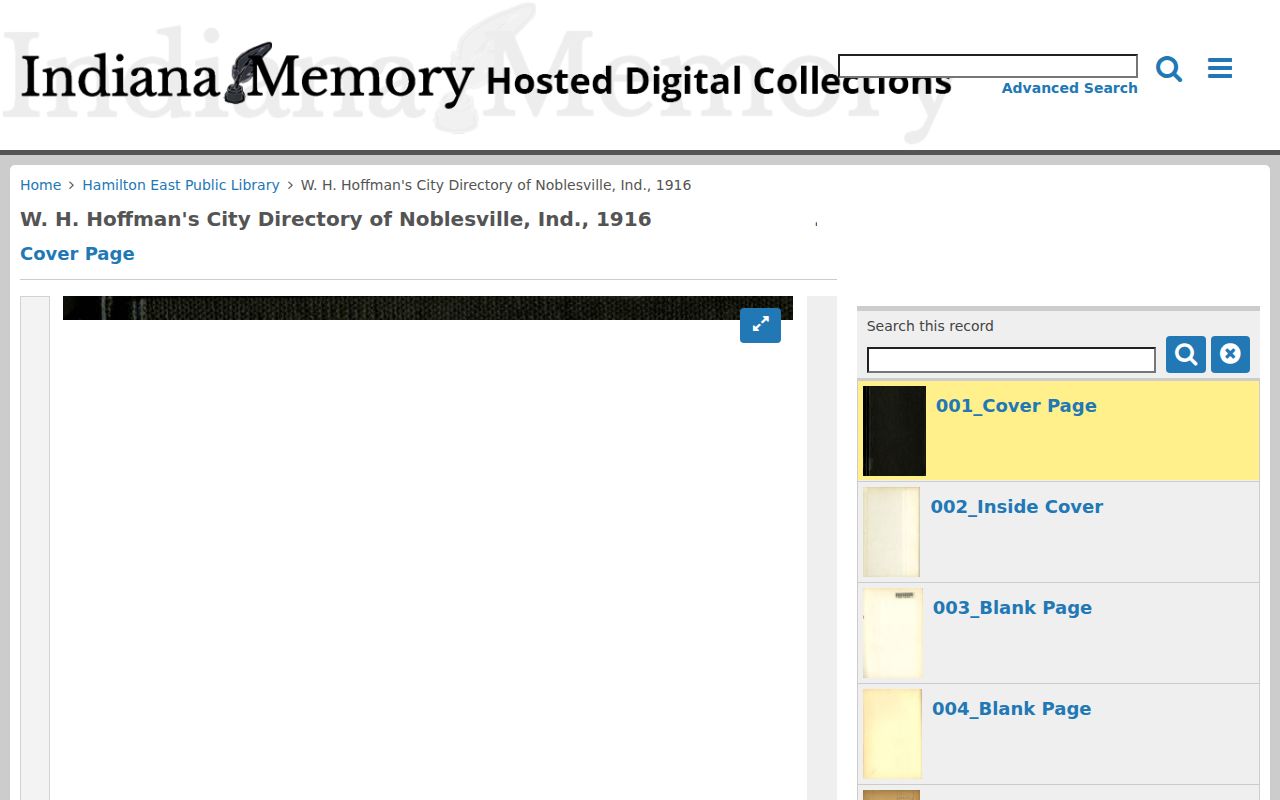
The captured collection page shows where to enter the scanned book and its item metadata. No OCR text was returned for the sampled page, so read and transcribe the image itself. Preserve exact spelling and do not infer a spouse, trade or house number unless it is visible on the line.
One volume can support three checks: find the surname alphabetically, test the address in the street-number section, then review the county list for a matching post office. Those checks reduce the chance of merging two people with similar initials. They also reveal whether the cited line is a residence, business, street or rural-list entry.
Hamilton County City Directory Help
The Crossroads Discovery Center combines directories with yearbooks, newspapers, funeral-home records, surname and county vertical files, maps, photographs, property-transfer abstracts and digitized books. Genealogy consultations are available in person without an appointment. Questions can also go by phone, email, U.S. mail or in person. The research contact number is 317-770-3236, and mail goes to Hamilton East Public Library, One Library Plaza, Noblesville, IN 46060.
Give staff a surname with spelling variants, a town or township, an approximate year, and any known street or former street name. State whether a scan, citation, obituary transcription, map, photo or shelf reference will meet the need. That detail helps staff choose between a city directory, a criss-cross volume and a vertical file without treating any one source as a complete residents roll.
Note: Directory years are intermittent, so ask staff to check the nearest earlier and later volume as well as the requested year.
Digitized Hamilton County Directory History
The IUPUI and HEPL digital collection brings together Hamilton County History, the 1907-08 Inter-State directory and gazetteer, township school photographs, and historic photographs from partner institutions. Item metadata identifies the contributor and date, which makes a stable citation much stronger than an undated copy found elsewhere.
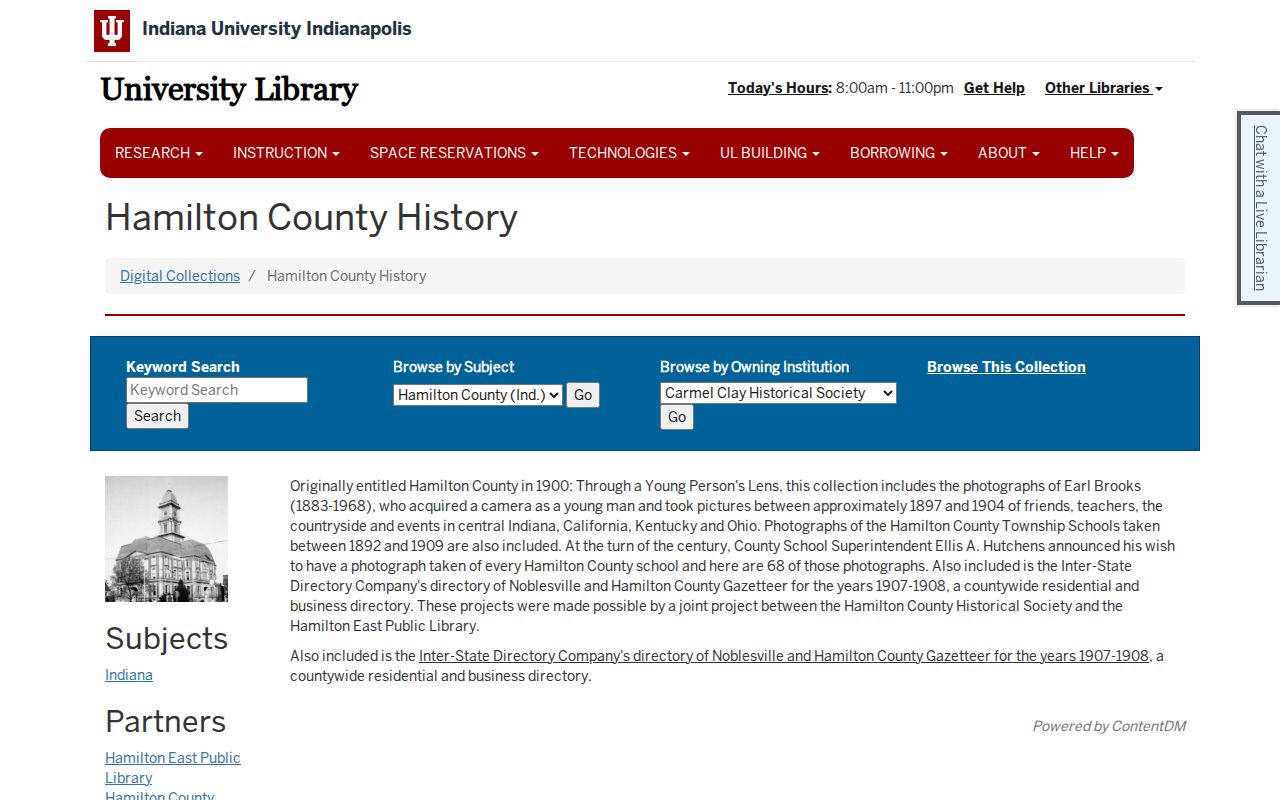
The collection view demonstrates the range of scanned local sources available alongside directories. Use the 1907-08 gazetteer for name, place and period trade context, then test the same person in the census, deed record, newspaper or later directory. A biography or caption is a lead, not final proof of every family fact.
The online route is only one channel. The Indiana State Library county guide identifies shelf codes and microfilm titles that are not duplicated by a broad digital search. HEPL staff and local societies can also locate uncatalogued clippings or photographs when the scanned run stops.
Reading Hamilton County Directory Entries
Start with the abbreviation key and the section heading. Hamilton County city directories may arrange people by surname, businesses by type, or addresses by street number. A typical line can include a name, residence, trade, employer, spouse or phone, but the fields vary by publisher and year. The verified 1916 metadata does not supply the text of a sample resident line, so only transcribe marks that are visible in the scanned entry.
| Name | Copy surname, given name and initials exactly as printed. |
|---|---|
| Address | Record house number, street wording, section and page. |
| Work or business | Include only when the scanned line states it. |
| Household notation | Use the volume's own abbreviation key before expanding a mark. |
| Post-office code | Preserve county-list abbreviations for later place matching. |
- Criss-cross directory
- An address-first book that groups entries by street and house number rather than surname.
- Householder index
- A name or address index used to reach the full household listing.
- Abbreviation key
- The publisher's legend for shortened street, trade, residence and household terms.
A directory occupant is not automatically the deeded owner. Compare an address line with a dated parcel, deed or census record and label each fact by source. That distinction matters most in Haines volumes, where an address association can be useful even though it proves neither title nor present occupancy.
Hamilton County Town Runs
The Indiana State Library Hamilton County guide fills town and era gaps. Its Noblesville holdings include the 1893-94 county directory, the 1919 Prairie Farmer directory, a 1938 Polk directory on microfilm, a 1948 Mullin-Kille survey on microfilm, and Robinson editions across selected years from 1965 through 1992-93. It also points to marriage, naturalization, probate, will, birth and death indexes that can corroborate a directory identity.
Fishers researchers should add the Mudsock Scrapbook covering 1800-1960 and the 1955-56 telephone directories. Carmel researchers have the 1979 and 1981 Robinson editions plus the Carmel Clay Historical Society. Westfield has its 1970 handbook and Westfield-Washington Historical Society material. Northern-town searches should retain the stated township or post office instead of forcing every line into one of the four large cities.
Note: The State Library dates describe holdings and indexes, not a promise that every volume is freely digitized for home viewing.
Hamilton County Historical Fallbacks
The Hamilton County Historical Society supplies another physical research channel from the Old Sheriff's Residence and Jail at 810 Conner Street in Noblesville. The 1875-76 building served as the county jail until 1977. Museum hours are Friday and Saturday, 11:00 a.m. to 3:00 p.m.; the listed phone is 317-379-1526. Its place-based material can add context to a directory name or address.
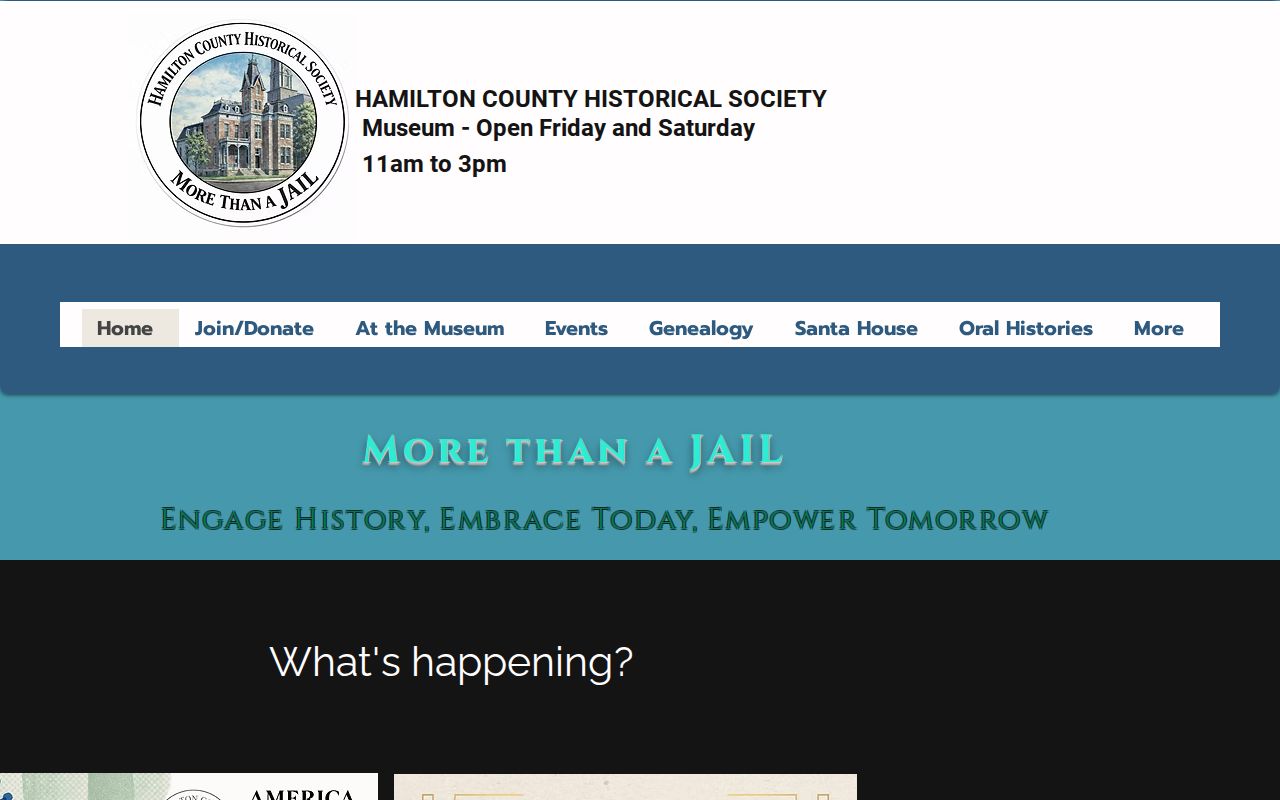
The captured society page is a useful starting point for research contact and museum context. Carmel Clay Historical Society holds more than 250,000 photographs, and Westfield-Washington Historical Society makes printed, written and photographic sources available for research. Sheridan Historical Society is named by the State Library guide, though an exact current holdings page was not located.
Indiana Archives and Records Administration is the next fallback for permanent state records. Its 2026 move has temporarily affected in-person access, so use the online catalog and remote assistance first, then confirm the current location and appointment terms before travel.
Trace Hamilton County Families by Directory
A historical directory gives a dated snapshot. Build a timeline by keeping each citation separate, checking the name and address from year to year, and using census years as wider household checkpoints. If a person disappears, do not assume death. The household may have moved, used a different post office, been omitted, or chosen an unlisted phone.
- Choose the correct town, publisher and year, then copy the first exact entry with its page citation.
- Move to the nearest earlier and later editions. Note spelling, address and post-office changes.
- Check the criss-cross or street-number section when the volume includes one.
- Pair the directory line with a federal census, deed, plat or county index from the same era.
- Use HEPL's newspaper, cemetery and Evans-Godby-Trout funeral records when the trail ends after a death.
Old street words can break an exact search. Hamilton County's 1866 Noblesville map article links Wiltshire with Maple, Emmaus with Cherry, Jack with North 16th, Polk Avenue with South 8th, Catharine with South 9th, Anderson with 10th and Emmons with 11th. Search both forms, then compare the legal description or map. For current address-keyed work, shift to the Hamilton County street directory instead of stretching a historical volume beyond its date.